


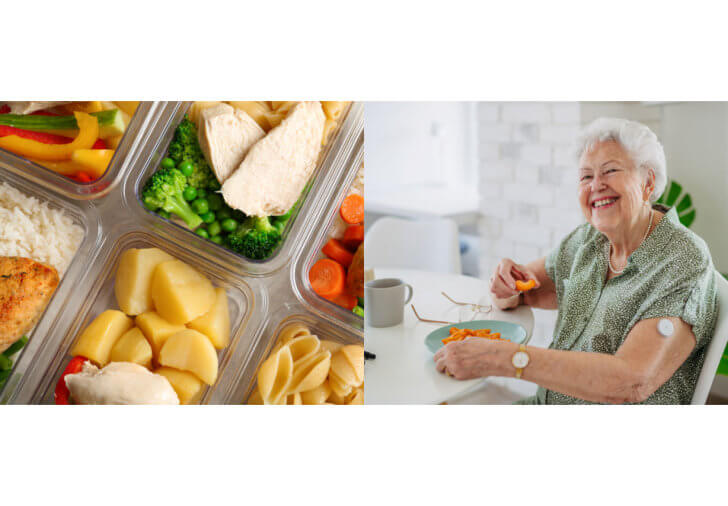
Eating well becomes more important—and sometimes more challenging—as we age.
- What a Balanced Senior Meal Really Looks Like
A healthy plate doesn’t need to be complicated.
Aim for:
- Lean protein (fish, eggs, beans)
- Fiber-rich vegetables
- Whole grains (brown rice, oats)
- Fresh fruits
Simple rule: If the plate has color, variety, and balance—it’s a good start.
- Why Hydration Is Often Overlooked
Many seniors don’t feel thirsty—even when their body needs fluids.
This can lead to:
- Fatigue
- Constipation
- Confusion
Easy hydration tips:
- Offer water regularly (not just when asked)
- Include soups, fruits, and herbal teas
- Keep drinks within reach at all times
- How to Make Meal Planning Easier (Real-Life Approach)
Meal prep doesn’t need to be complicated.)
Try this:
- Prep ingredients 1–2 times a week)
- Cook in batches
- Rotate simple meals (don’t overcomplicate variety)
For seniors with chewing or digestion issues, softer meals like stews or steamed dishes work best.
- Common Question
“Why is eating becoming harder for my loved one?”
Answer:
Changes in appetite, taste, digestion, and energy are normal with aging—but they need to be supported with structured meals.
- Support That Makes Daily Nutrition Easier
Meal planning becomes easier when families don’t have to do it alone.
Peachcross Home Care Services LLC helps families create personalized meal routines that match:
- Health conditions
- Dietary restrictions
- Cultural food preferences
- Who This Is For
- Families managing senior nutrition at home
- Caregivers struggling with meal consistency
- Seniors experiencing appetite changes
- Key Takeaway
Consistency matters more than perfection. Simple, balanced meals done daily have a bigger impact than occasional “healthy eating.” If you need support in maintaining proper nutrition and daily care routines for your loved one, contact us to learn how we can support your family’s care needs.
Disclaimer
Blogs, content, and other media uploaded online are for informational purposes only. Contents on this website should not be considered medical advice. Readers are strongly encouraged to visit their physician for health-related issues.